


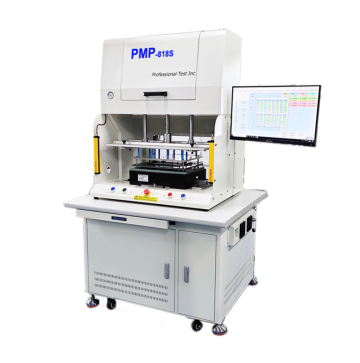


PCB Surface Cleaning Machine SMM-450 by China Suppliers - Enhance Quality, Efficiency, and Reduce Costs at Our Factory
PCB Surface Cleaning Machine SMM-450
Technical Parameters
1. Innovative Design and Patent Features
The machine boasts an independent innovation patent design (Patent: 2017SR471774), making it the industry's first with an advanced contact cleaning system. The entire design of the machine also has independent intellectual property patents (Patent number: ZL201930178118.7), based on human body technology data. The brush device is uniquely designed to effectively clean larger dust particles, protecting the sticky rollers from abrasion. Furthermore, the function and effect of the entire machine have earned a national independent intellectual property patent (Patent number: ZL201821339678.2).
2. Advanced Control and Operation Systems
This machine uses a Panasonic PLC programmable control system and a SAMKOON touch screen, making it simple and easy to operate. The track width adjustment design features both manual and automatic modes for convenient and quick operation. Additionally, the machine has a fault detection function that displays fault IO points on the touch screen, providing clear and simple diagnostics for the user.
3. High-Quality Components for Stability
The transmission system features a ZD motor for stable performance, with the transmission import and export SENSOR selected from Panasonic and the limit SENSOR from OMRON, ensuring accurate and stable performance. Other key components include Japanese SMC cylinders for the brush, central support, and roller lifting functions, as well as Japanese THK ball screws and NSK bearings, which improve the accuracy and lifespan of the machine.
4. Efficient Dust and Static Control
The machine is equipped with a Keyence static eliminator at both the import and export stages to efficiently remove any static electricity from the PCB surface. Additionally, the dust collection device effectively collects dust particles generated during production, preventing contamination of the board surface and reducing the risk of machine failure. The brush cleaning method ensures that there are no large residues left on the PCB surface, while the sticky roller method removes tiny contaminants, ensuring the cleanliness of the PCB.
5. Energy Efficiency and Durability
The brush drive adopts a Lead stepping motor, offering high efficiency and energy savings. The power supply uses Taiwan Mingwei, known for its stability and durability, while the relay is sourced from Japanese OMRON for enhanced machine stability. With multiple working mode options available on the touch screen, the machine’s performance remains stable, ensuring reliable operation for various cleaning and maintenance needs.


Frequently Asked Questions (FAQ)
What is the main function of the PCB Surface Cleaning Machine SMM-450?
The SMM-450 is primarily designed to remove filth, dust particles, and other surface contaminants from PCBs, ensuring optimal board cleanliness and reducing potential machine failures during production.
Does the SMM-450 hold any intellectual property patents?
Yes, the machine holds multiple patents, including an independent innovation patent for its contact cleaning system (Patent: 2017SR471774), a design patent based on ergonomic data (Patent: ZL201930178118.7), and a national function patent (Patent: ZL201821339678.2).
How does the machine control static electricity during the cleaning process?
The SMM-450 is equipped with a high-performance Keyence static eliminator at both the import and export stages, which efficiently neutralizes static electricity on the PCB surface.
What control and operation interface does the machine use?
It features a Panasonic PLC programmable control system combined with a SAMKOON touch screen. It also includes manual and automatic modes for track width adjustment, alongside a real-time fault detection system that displays diagnostic IO points.
What key components ensure the stability and precision of the SMM-450?
The machine uses high-quality parts including a ZD motor, Panasonic and OMRON sensors, Japanese SMC cylinders, THK ball screws, NSK bearings, and a Taiwan Mingwei power supply to guarantee long-term stability and precision.
How does the dual-action cleaning system work?
The machine utilizes a brush cleaning method to clear away larger dust and residue particles first, protecting the sticky rollers. Next, the sticky roller method removes the remaining tiny contaminants to ensure thorough surface cleanliness.