Getting your PCB assembly right is super important if you want top-notch electronics. One of those key players in the game is the Solder Paste Printer. Basically, this machine spreads solder paste onto your circuit board before you pop on the other components. When it’s done right, it really helps things stick better and work more reliably.
But here’s the thing — dialing in the perfect settings for your Solder Paste Printer? That’s kinda an art. Too much paste and you might get bridging (which we really don’t want), but too little could mean weak connections. Companies like ASM Assembly Systems offer pretty fancy solutions, but still, you gotta tweak them just right for the best results.
And don’t forget — regular maintenance is key. Clogged nozzles or misaligned registration can totally mess with your process. It’s a good idea to check on these issues frequently, so your quality doesn’t suffer. Spending a bit of time really learning how your printer works can make a big difference. Let’s dive into some practical tips to help you ramp up your PCB assembly game.
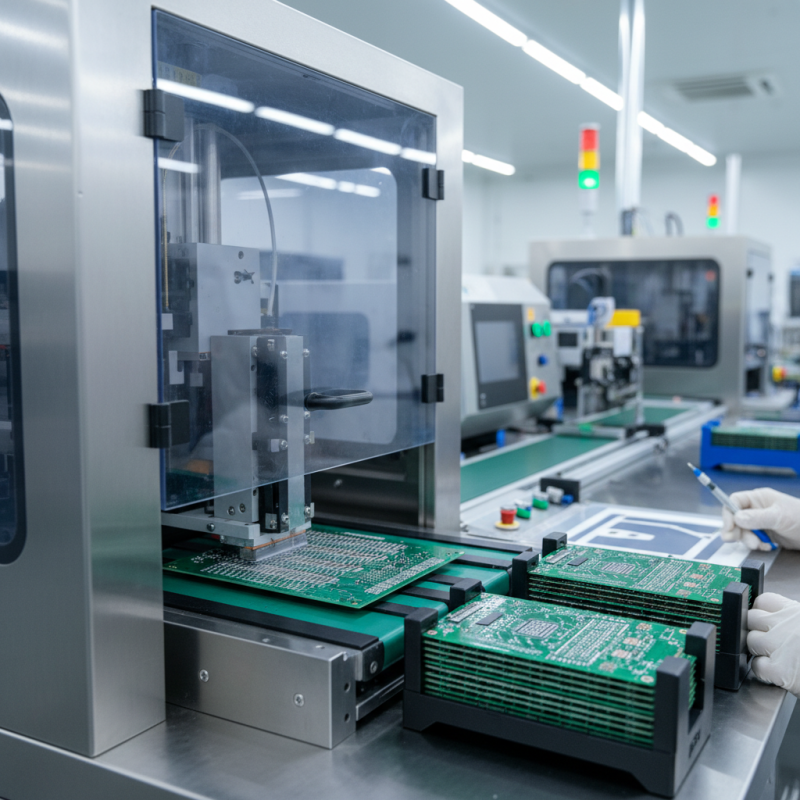
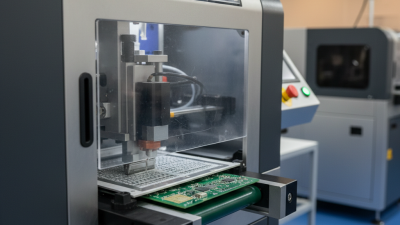
Solder paste printers play a crucial role in PCB assembly. Understanding their basics can optimize the entire process. These printers deposit solder paste onto PCB surfaces, allowing components to be soldered securely. The precision in this step significantly influences the overall reliability of the circuit board.
Reports indicate that around 29% of PCB defects can be traced back to issues with solder paste application. The right printer helps minimize this risk. Maintaining consistent speed and accuracy is vital. Operators should regularly calibrate machines to ensure optimal performance. Poor calibration can lead to uneven paste distribution, causing weak solder joints.
While choosing a solder paste printer, one must consider various factors, such as the thickness of the stencil and the paste type. The alignment of the printer is also critical. Misalignment can cause a staggering 50% increase in defects. By routinely checking these variables, manufacturers can enhance efficiency and reduce costs. Emphasizing quality control will lead to better production outcomes in the long run.
In Solder Paste Printing, several key factors significantly influence the quality of the output. First, the printer's settings play a crucial role. Accurate alignment and configuration ensure that solder paste is deposited evenly. Misalignment can create insufficient or excessive paste application. This discrepancy leads to defects in solder joints and can compromise the functionality of the PCB.
Furthermore, the choice of stencil thickness directly impacts the paste transfer efficiency. A stencil that is too thick may hinder paste flow, resulting in poor adhesion. Meanwhile, a stencil that is too thin can lead to insufficient paste deposits. Finding the right balance is essential. Each PCB design will have unique requirements, making it important to reflect on the specifics of the project.
Additionally, environmental factors shouldn't be overlooked. Humidity and temperature can affect solder paste viscosity. It's essential to store solder paste correctly and maintain a consistent printing environment. Even minor fluctuations in these conditions can lead to variability in print quality. Regular calibration of equipment can help mitigate these issues, but it requires ongoing attention and adjustments.
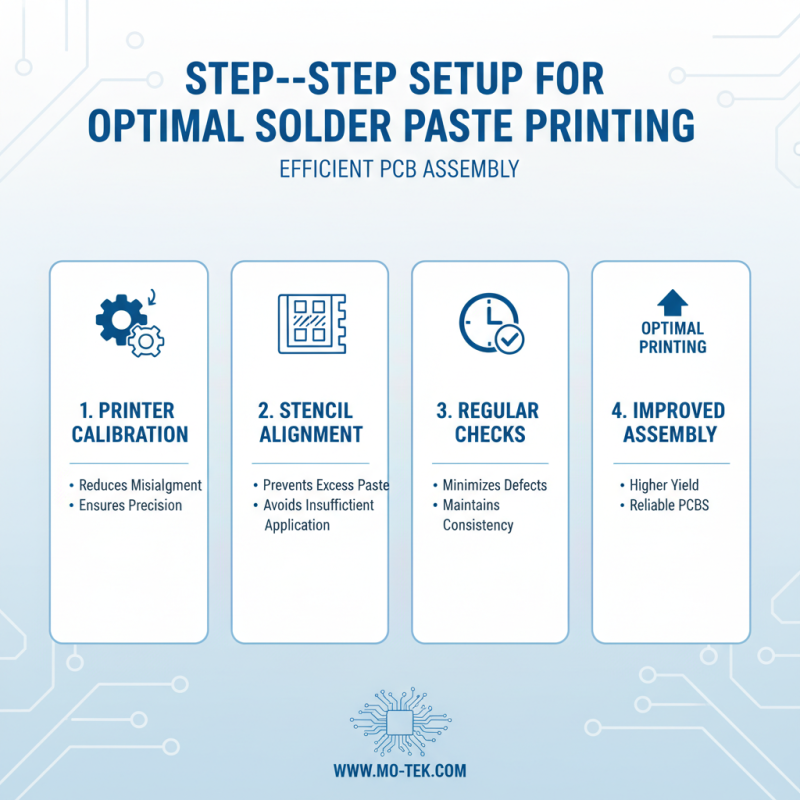
Setting up an optimal solder paste printing process is crucial for efficient PCB assembly. Begin by ensuring your Solder Paste Stencil Printer is calibrated correctly. Calibration reduces misalignment and ensures precision. A misaligned stencil can lead to excess paste or insufficient application. Regular checks help minimize these issues.
Consider the ambient conditions in your workspace. Temperature and humidity can significantly affect the viscosity of solder paste. An ideal environment should be stable. Be mindful of any fluctuations and adjust settings on your printer accordingly.
When loading the solder paste, ensure it is evenly distributed across the stencil. It’s easy to underestimate this step, but uneven paste can cause defects. Take time to spread the paste uniformly. Consider documenting your setup process for future reference. This practice can help identify errors in later runs. Adjustments may be necessary, but learning from experience can enhance your PCB assembly efficiency.
Solder paste application is crucial in PCB assembly. Common issues arise during this process. A frequent problem is improper paste consistency. This can lead to insufficient or excessive paste on components, affecting solder quality. Ensuring the right viscosity before printing is essential. Regular checks can help maintain consistency in the Solder Paste Printer Machine.
Another concern is misalignment on the PCB. Misalignment can occur due to inaccurate positioning during printing. This leads to solder bridging or insufficient solder at joints. Utilizing a vision system can assist with alignment precision. It is vital to train operators to recognize misalignment quickly.
Clogged apertures are also a common issue with solder paste printers. Blockages restrict paste flow, causing uneven application. Regular cleaning and maintenance of the Solder Paste Printer Machine are necessary to prevent this. Operators should be vigilant in monitoring paste levels and flow rates to ensure efficient PCB assembly.
Maintaining and calibrating your solder paste printer is crucial for achieving high-quality PCB assembly. Regular maintenance can prevent common issues, such as misalignment and inconsistent paste application. Research indicates that improper calibration can lead to defects in up to 30% of assembled boards. Simple tasks, like cleaning the print head and adjusting the squeegee pressure, can make a significant difference.
Calibration involves checking the printer's settings against industry standards. Many professionals recommend using a thickness gauge to measure solder paste application. If the thickness is off, it can cause solder joint failures. According to a recent industry report, 20% of production problems stem from inadequate solder paste application. Utilizing a Solder Paste Jet Printer can enhance precision, reducing variations in thickness.
Feedback loops between operators and engineers are essential. Operators often notice issues that engineers may overlook. Implementing a system for sharing these insights can improve overall quality. However, many may neglect the importance of documenting calibration changes. A failure to track adjustments can lead to repeated mistakes. Fostering a culture of continuous improvement is vital for long-term success in PCB assembly.
This chart illustrates some essential statistics regarding the maintenance and calibration of solder paste printers essential for efficient PCB assembly. Regular calibration, maintenance actions, and quality checks contribute to minimizing notable issues and enhancing overall printing performance.
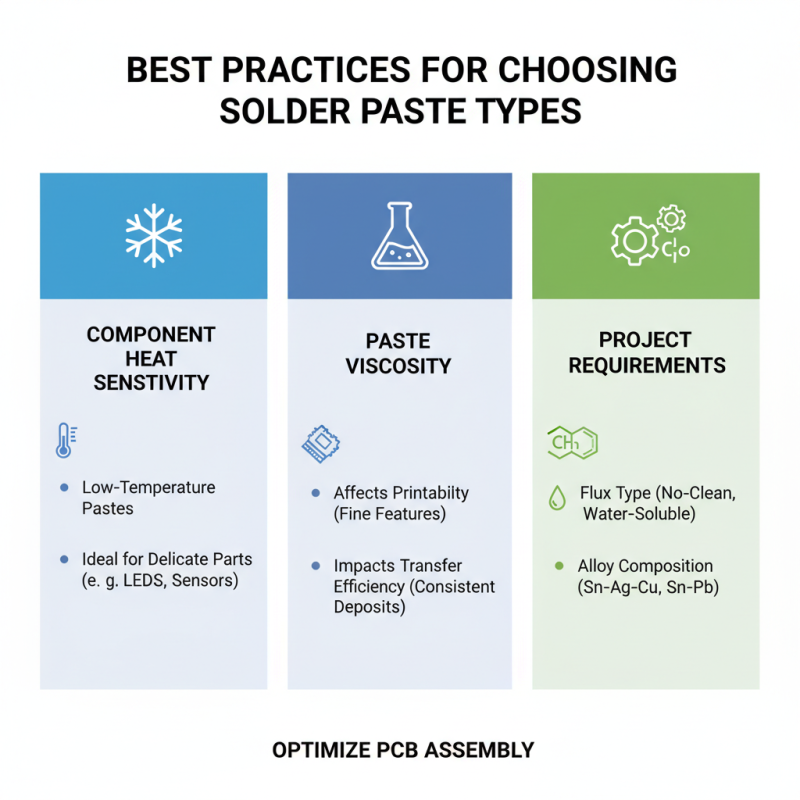
Choosing the right solder paste type is crucial for efficient PCB assembly. Different projects may require specific paste characteristics. For example, low-temperature solder pastes work well for heat-sensitive components. Evaluating paste viscosity is also important, as it affects printability and transfer efficiency.
One useful tip is to match the solder paste to your printing equipment. Use a paste that flows well with your printer’s settings. It’s essential to consider the size of the components on your PCB. For small components, finer particle sizes can prevent issues like bridging.
Lastly, always check the shelf life of the solder paste you select. Expired paste can lead to poor results. Remember, the choice of solder paste can greatly influence the overall quality of your assembly. Take time to experiment with different types and find what works best for your projects.
Achieving efficiency in PCB assembly is crucial for success. By optimizing the solder paste printing process, manufacturers can significantly enhance overall productivity. Research indicates that a well-calibrated solder paste printer can reduce production time by up to 30%. This efficiency allows companies to respond faster to market demands, thereby improving their competitive edge.
Proper techniques in using tools like the 3040 Solder Paste Printer can elevate quality and consistency. Utilizing the right printing speed and pressure ensures even paste distribution. However, many operators inadvertently overlook the importance of regular equipment maintenance. Research shows that neglecting this aspect can lead to defects in up to 15% of printed circuit boards.
Training operators thoroughly is often an underappreciated aspect of the process. Investing time in developing skills can prevent common mistakes and improve accuracy. Reports highlight that companies with structured training programs experience a 25% reduction in errors. It's important to create an environment where feedback is actively sought and applied, refining techniques continuously.
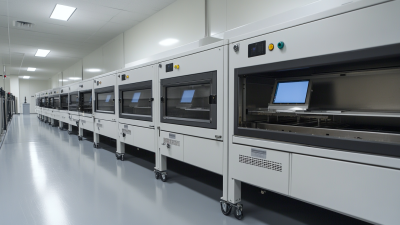
In today's competitive landscape of PCB assembly, achieving maximum efficiency and precision is paramount. The latest advancements in solder paste printing technology play a crucial role in meeting these demands. A notable example is a state-of-the-art solder paste printer that combines innovative design with modularity to enhance reliability and performance. It is specifically engineered to adapt to both high-mix contract manufacturing environments and high-volume production lines, effectively addressing the varied needs of modern electronics manufacturing.
This printer's interior design has seen significant improvements, leading to enhanced operational efficiency. Its capability to maintain high throughput without sacrificing quality makes it a preferred choice for manufacturers looking to streamline their processes while ensuring precise paste application. The meticulous engineering behind this printer allows it to cater to diverse assembly requirements, thereby solidifying its place as a vital tool in the quest for superior production outcomes in the PCB assembly industry. Manufacturers can leverage this advanced technology to boost their productivity and maintain a competitive edge in an ever-evolving market.
: Solder paste printers deposit solder paste onto PCBs, ensuring components are soldered securely, which affects circuit reliability.
Reports show that about 29% of PCB defects arise from solder paste application issues, highlighting its importance.
Consider stencil thickness, paste type, and printer alignment. Misalignment can greatly increase defects.
Poor calibration can lead to uneven paste distribution, compromising solder joint strength.
The right type ensures efficiency and suitability for specific projects, especially for heat-sensitive components.
Viscosity affects printability and transfer efficiency, making it a vital characteristic to evaluate.
Smaller components benefit from finer particle sizes to prevent bridging issues during application.
Expired solder paste can lead to poor assembly results, so always verify its freshness.
Optimized processes can improve productivity and reduce production time, enhancing market responsiveness.
Well-trained operators can reduce common errors, improving accuracy and overall assembly quality.
The article "Top Solder Paste Printer Tips for Efficient PCB Assembly" provides a comprehensive overview of key principles and techniques to optimize solder paste printing in PCB assembly. It begins with an understanding of the fundamentals of solder paste printers and highlights the key factors that influence printing quality, such as printer alignment, paste viscosity, and stencil design.
A step-by-step setup guide is included to help users achieve optimal solder paste application, along with solutions to common problems encountered during the printing process. Maintaining and calibrating the solder paste printer is crucial for long-term performance, and the article emphasizes best practices for selecting appropriate solder paste types. By implementing these techniques, manufacturers can significantly enhance their PCB assembly efficiency, ensuring high-quality outcomes in their production processes.