- Home
- Products
- News
- About Us
- Support center
- Contact Us
inquiry
Leave Your Message
Technology is constantly changing at a very fast pace in the electronics manufacturing industry, compelling it to use advanced technologies such as Smt Pick Place. The industry found that as demands increase, so did SMT (Surface Mount Technology), by the increased efficiency and accuracy in its continued application as the backbone of the present-day production procedures. According to the latest report released by Technavio, the SMT market is likely to hit over 7% CAGR growth across the globe between the years 2021-2025 due to integration of advancements in automation and the high levels of complexity in electronic circuits. This scenario elaborates the importance of Smt Pick Place technology as an operational workflow enhancement and the reduction of time to market for electronic components.
Well-known and with over 15 years of experience in SMT, Morel Equipments Co., Limited has gone a long way from a supplier of accessories to a complete solution provider. Our product range, from state-of-the-art Pick And Place Machines to automated soldering robots and advanced testing equipment, will echo-in all areas of innovation and reliability in this business. However, companies looking for better production efficiency will need to understand the various possible applications of Smt Pick Place technology within the industry. In this blog, we have covered ten such applications, which speak of the significance in modern manufacturing brought to you by Smt Pick Place and their world-altering effects on the efficiency and quality of the electronics sector.
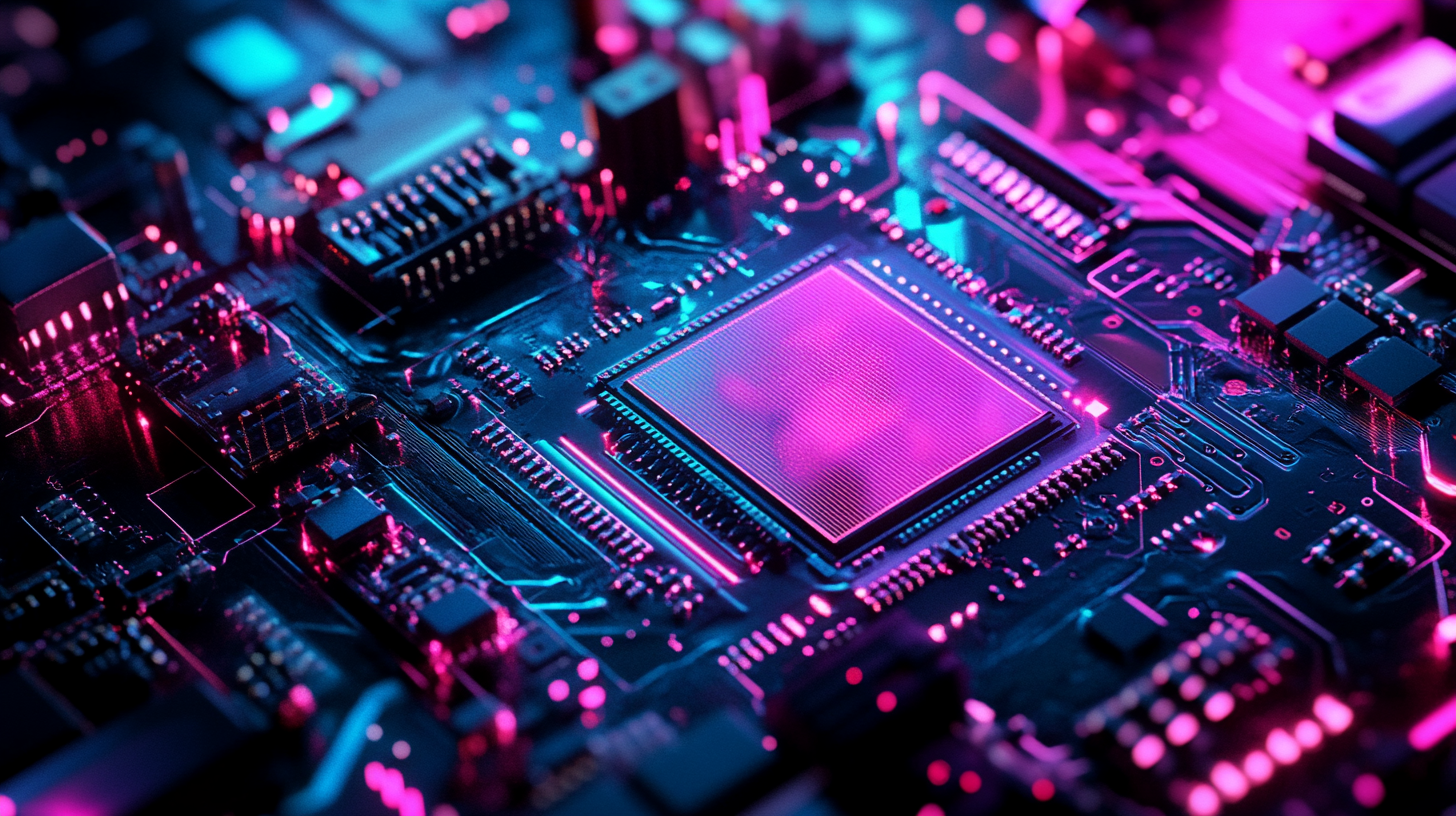
SMT pick and place technology is extremely crucial for modern electronics assembly as it enables efficient placement of components on PCB (printed circuit board). The demand for smaller and highly efficient electronic gadgets is thus creating equally great need for precise and rapid assembly. MarketsandMarkets projects that the global Smt Equipment market is to grow from USD 3.44 billion in 2021 to USD 4.89 billion by 2026, a clear indicator of the technology's importance in the electronic manufacturing sector. The SMT pick-and-place machine's speed and precision together help drastically reduce assembly time and thus improve yield rates. Reports indicate that automated pick-and-place systems achieve component placement speeds of up to 100,000 components per hour with accuracy up to ±20 microns. This will be a prerequisite for high-density applications such as smartphones, where thousands of tiny components must be fitted into a small space. The advanced systems also typically offer innovative features like real-time inspection using vision systems to help with the reliability of the assembly. Furthermore, SMT pick-and-place technology also creates cost savings in the electronics assembly process. With the reduction of manual intervention and increased efficiency, the manufacturers can bring the labor costs down significantly and also cut down the chances of human errors. IPC studies have shown that manufacturers make savings in the operational costs of 20-30% by employing automated assembly processes as opposed to manual ones. This economic incentive promotes the migration toward the adoption of SMT technology to become one basis of fast electronics manufacturing in today's fast-paced economy.

The automotive sector is evolving, and there are constant developments that push the threshold for manufacturing processes toward more efficiency, as well as precision. SMT in its broader capacities plays even more a part in this transformation through advanced pick-and-place machines. According to the latest market report from Grand View Research, the global market for SMT devices is expected to reach around $5 billion by the time it runs into 2027. This increases the increasing influence of SMT on automotive manufacturing.
With SMT solutions, assemblers can simplify their assembly lines and hence, cut down the time taken to produce. Also, the report MarketsandMarkets suggests that on implementing SMT, the placements can be more accurate up to 90%. Thus, it can easily copy complicated electronic systems and fit them into vehicles. The same precision is needed because the automotive companies are turning to new technology such as electric vehicles and self-driving systems, which require complex PCB designs and components.
The agility offered by this technology allows manufacturers to meet the pace of rapidly changing market demands. AIAG has even emphasized that with SMT, companies can gain a competitive advantage with 20% less time-to-market. It's the same trend in the automotive sector towards efficiency itself; thus, ongoing adoption of the SMT pick and place technology will also be critical in determining the future of automotive manufacturing.

SMT pick and place systems have become indispensable in today's fast-paced world of medical device production. These machines automate the precise placement of small electronic components on PCBs (printed circuit boards) with much greater accuracy than manual assembly. The medical industry is constantly changing, requiring even more reliable and sophisticated devices. SMT technology is the way forward here, as it provides placement to the precision to the wwwfrac{1}{10000} of each component-very vital for the function and safety of devices such as pacemakers, diagnostic machines, and imaging equipment.
SMT systems, therefore, help to increase the reliability of medical devices by enhancing the precision of placement while shortening lead times. Less human error means faster production lines-and faster times to market for manufacturers. This flexibility is crucial in an area of constant change, with new inventions and new compliance standards. In addition, SMT pick-and-place technology allows for the miniaturization and complexity of components, thus facilitating the making of compact devices with advanced capabilities.
The protection of SMT technology by data harmonizes itself with the med-tech industry`s progressive move towards smart devices. The accurate monitoring of placement accuracy ensures that quality controls are enhanced and that each batch of devices meets stringent regulatory requirements. The move toward automation within the medical device space will embrace SMT pick and place technology, bringing new products and reigniting the lifecycle of the manufacture of life-saving medical machinery.

Reliability, precision, and efficiency are the hallmark features of the aerospace industry. As the industry and its processes evolve, so do its manufacturers, increasingly adopting Surface Mount Technology (SMT) for component assembly. SMT pick-and-place systems are crucial in fulfilling high qualification standards for aerospace assemblies, as they enable integration of complex electronic systems for accurate navigation, communication, and monitoring.
One of the best features of SMT technology in aeronautics is its ability to manipulate complex wiring layouts within acceptable spatial weight limits. With the reduction in traditional through-hole components, a much denser packing of electronic parts is possible, which means that board space is significantly optimized. Every gram counts in the aerospace application; cockpit displays or control systems leave very little room in their designs without sacrificing performance.
Moreover, they also improve overall labor efficiencies in manufacturing. Automated means of accomplishing tasks mitigate risks associated with manual error and contribute to an increased throughput for the thoroughspace assembly of critical components. This is necessary within schedules of aerospace projects, where delay in such projects cripples finances. Furthermore, this accuracy results in increased reliability of electronics assemblies, which is central to safety standards in aviation. Coming to SMT technology, aerospace manufacturers will walk the talk in the future by changing the aircraft and aerospace technologies into the next generation.
Surface Mount Technology (SMT) turned upside down the entire gamut of manufacturing, especially within the consumer electronics realm. The demand for exacting and rapid production processes has surged as devices are getting smaller and multifunctional. SMT pick-and-place technology thus became a major link in the chain, allowing manufacturers to place tiny components with incredible accuracy and speed onto circuit boards. This development, in turn, reduces the production cost and accelerates time-to-market for new electronic products, ushering in innovation.
The effects of SMT in consumer electronics are most apparent in the widespread emergence of smart devices. These products are becoming more complex in their features and connectivity, thus demanding an efficient assembly process. SMT pick-and-place systems can accommodate a wide array of components, from surface-mount devices to complex integrated circuits, enabling manufacturers to keep pace with the ever-changing demands in the market. Automation and robotics in SMT processes can increase productivity while minimizing human error, thus increasing overall product quality.
Additionally, TSMT technology contributes to the global push toward sustainability. As consumers increase awareness of environmental issues, manufacturers, in turn, are finding ways to minimize waste and maximize resource efficiency. SMT's accurate processes allow for efficient use of materials, whereas the process's efficiency leads to lower energy consumption during manufacturing. Such features attract eco-consumers but also provide good publicity in an increasingly saturated and sustainability-oriented market.
The decade about has seen much innovation and change in surface mount technology (SMT) pick and place systems due to robotics and automation. As industries become more advanced in the use of robotic systems to increase efficiency, the global market for SMT automatons is expected to grow from around $2.65 billion in 2022 to over $5.3 billion by 2029, according to a market study done by Fortune Business Insights. So, what this growth means is more of an expanding capacity of production; there is also a major trend towards integrating advanced robotics into industrial processes.
Adoption of robotics has made SMT pick and placing technologies an assembly line of unmatched precision and speed. Such systems are equipped with advanced algorithms and will often employ AI algorithms to optimize the placement process, just to guarantee perfect alignment of components onto printed circuit boards (PCBs). ResearchAndMarkets reported that by automating electronics manufacturing, production rates could increase by 30% while errors, affecting product quality and wasting resources, are also minimized.
On the other hand, the transformation to Industry 4.0 quickly further encourages the employment of robotic solutions for SMT. With IoT, machines can communicate more effectively for real-time monitoring and rapid production setting adjustments. That enhances operational efficiency while establishing predictive maintenance, which is anticipated to reduce downtime by up to 20%. Continued use of these technologies will definitely take SMT pick-and-place systems to an advanced level of development, giving rise to a new rank of productivity and quality among manufacturers in the electronics industry.
Efficiency in all the manufacturing processes has become very necessary in the telecommunications industry in this fast-changing scenery. Surface Mount Technology (SMT) pick and place machines become the real boom and offer the real breakthroughs that helped in the smooth and easy production of telecommunications equipment. The machines have provided an advanced means to automate fixation of components onto printed circuit boards (PCB) at great speeds and very high precision unlike what could be equated to human efforts.
This development in SMT machinery means the telecommunications-manufacturers will cut their production times enormously. Thousands of components can be placed in an hour, and with that robotics-like precision, minimizing errors and boosting overall productivity. Although, this advancement does not only improve quality control, but also allows companies to be more responsive to the market demands and shifts in technology in order to remain competitive amongst some of the giant brands.
For instance, it is expected that with SMT technology the designs of the equipment in telecommunications would evolve continuously. As the devices are miniaturized and integrated, it becomes increasingly relevant having the capability to use different sizes and types of components. Because of the above facts most intelligent pick and place systems can hold multiple component variations and size. Therefore, it provides manufacturers with a unique avenue for rapid-measurement and the fast adoption of technological advancements in their products. Overall, the environment created through the introduction of SMT within telecommunications equipment-making process operates on the principles of efficiency, accuracy, and creative strategies towards future connectivity solutions.
Very rapidly revolutionizing as industrialization takes new bounds, Surface Mount Technology (SMT) has emerged and become increasingly important to efficiency and productivity gain. Recent data provided by the Allied Market Research indicates that the worldwide market for SMT is expected to reach $27.35 billion by the year 2027, with growth upwards on CAGR 6.2% from 2020. Increased demand for small and high-performance electronic component varieties for various applications, including consumer electronics and automotive, continues to fuel this growth.
The recent trend on SMT is the development of sophisticated pick and place machines that integrate artificial intelligence and machine learning. This relates to real-time monitoring and adaptive processes, reducing downtime while improving overall production efficiency. According to a report from Technavio, the use of automated pick and place systems will be ramped since an increasing number of such machines have already shown efficiency in managing a variety of components quickly and with great precision.
Whereas, the application of Industry 4.0 in SMT operations helps to further streamline manufacturing processes. With the advent of IoT seamless connectivity, manufacturers have been provided the opportunity to capitalize on data analytics towards improved decision-making and predictive maintenance. IoT in manufacturing market's growth is also emphasized in a report by MarketsandMarkets, showing an increase from $27.31 billion in 2020 to $75.49 billion by 2025, thus highlighting the modern interconnectedness of SMT systems within industrial automation.
Surface Mount Technology (SMT) is a method used in automotive manufacturing to assemble electronic components onto circuit boards. It significantly enhances efficiency and precision in the production process, allowing manufacturers to integrate complex electronic systems into vehicles.
SMT enables automotive manufacturers to streamline assembly lines, improving placement accuracy by up to 90% and reducing production time. It helps companies adapt to market demands, reducing time-to-market by as much as 20%.
SMT technology offers precision, reliability, and efficiency, allowing the assembly of complex components while optimizing space and weight. It helps in maintaining safety standards and enhances production efficiency with automated processes that reduce human error.
In consumer electronics, SMT facilitates the production of compact and multifunctional devices by allowing manufacturers to place tiny components with great accuracy. This reduces production costs and accelerates time-to-market for new products.
SMT pick and place systems can accommodate various component types, which is essential for the production of smart devices that require intricate features and connectivity. This technology meets the evolving market demands effectively.
SMT enhances material utilization and reduces waste during production. Its efficiency also leads to lower energy consumption, making it an eco-friendly choice that appeals to environmentally conscious consumers.
The global SMT equipment market is projected to reach approximately $5 billion by 2027, indicating its increasing significance in various sectors including automotive, aerospace, and consumer electronics.
Precision is critical in SMT applications to ensure that complex electronic assemblies function reliably, which is essential for safety in industries like aerospace and automotive, where small errors can lead to significant issues.
The integration of automation and robotics in SMT processes minimizes human error and enhances productivity, leading to improved overall product quality and consistency.
The ongoing adoption of SMT technologies will be pivotal in shaping the future of automotive manufacturing as companies strive for greater efficiency and technological advancements, such as electric vehicles and autonomous driving systems.