- Home
- Products
- News
- About Us
- Support center
- Contact Us
inquiry
Leave Your Message
With the rapid evolution of electronics manufacturing, Smt Reflow Soldering is now an important process for the reliable connection and high-quality solder joint. As per a recent market report by MarketsandMarkets, the global SMT market is forecasted to reach USD 10.9 billion by 2026, growing at a CAGR of 5.3%. The reason for this growth is attributed to the increasing demand for miniaturization in electronics, which require effective soldering techniques. Therefore, as the industry moves toward sophisticated compact designs, it is very much expected that the advantages under Smt Reflow Soldering techniques would be enticing to global buyers in their quest to improve the production capacity.
Morel Equipments Co., Limited focuses on delivering customized solutions to meet various demands based on more than 15 years of experience in the SMT industry. Moving from accessories provision to one-stop solution providers in regard to pick-and-place machines, automatic soldering robots, and solder paste equipment, Morel specializes in products of good quality. In view of the high performance and precision of Smt Reflow Soldering, our solutions streamline production processes while increasing product reliability and performance levels. In this blog, we will focus on this technique's key advantages to buyers worldwide and how they could revolutionize their manufacturing process.

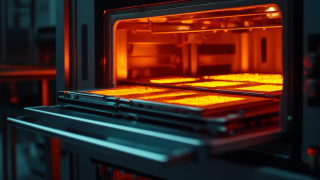
This method uses heat to melt and reflow solder, effectively joining components to printed circuit boards (PCBs). It has become a vital technique in electronic manufacturing, especially for buyers worldwide looking for speed and quality. The compactness and sophistication of electronics make it even more demanding for SMT reflow soldering. The most important advantage of SMT reflow is that it reduces thermal shock to the component compared to Wave Soldering processes and proves to be a highly reliable final product. The upcoming Munich Shanghai Electronics Production Equipment Fair for 13-15 April 2023 further highlights the growth of interest in SMT technologies. About 800 exhibitors are likely to demonstrate the latest innovations and advancements in SMT line equipment. Such platforms tend to offer a gathering point for sharing knowledge and emerging trends within the industry perspective. According to the current industry report, there is a projection for a rise in the global SMT market at the CAGR of 7.5 % from the years 2021-2026. Such a huge range is indicative of the great opportunity in the market for new soldering techniques. In fact, the testimonies of firms such as USound that secured $30 million-a considerable amount-to grow their MEMS speaker wing gave perspective on how SMT and reflow soldering facilitate scale-ups to industries in manufacturing processes. They would entail inventions in such high-technology that it would be even focused on one's person or wearable devices, thus defining the need for enclosed, precise, and high-speed soldering techniques. This should drive the relevance and promise of SMT in innovations down the line within electronics.

SMT reflow soldering is becoming quite significant as far as the global supply chain is concerned, more so with the world over electronics manufacturing. For example, the recent happenings-the release of new high-current common-mode chokes for reflow soldering by TDK, which show the demand for components robust and efficient enough to address the company's modern operational needs. The emergence of high-performance reflow ovens in India plays another testimonial to this; indeed, the country is fast emerging as one of the major hubs in electronics, with industry forecasts estimating that the overall growth of the sector would touch $200 billion by 2025.
One of the several advantages of SMT reflow soldering is that it allows low-temperature assembly processes. Recently, with the use of specialized solder pastes such as the quaternary eutectic 13.5Sn-37.5Bi-45In-4Pb, high reliability in solder joints has been afforded to manufacturers even with lower temperatures, hence reducing thermal stress on sensitive electronic components. It improves not only reliability of the product but overall efficiency of production lines since faster turnaround times and much lower energy consumption would be expected.
So the continuous research for optimizing the soldering reflow parameters makes a decent contributor to the success of such an ongoing operation. In fact, research findings concerning the effects of solder phase transformations have highlighted cooling rates and control parameters for attaining good quality solder joints as major concerns. The continuous attention on innovating methods also reiterates the growing awareness that reflow soldering has become a critical process to cater to the high expectations of global electronics manufacturing and further enables companies to work at a competitive edge in such a rapidly changing environment.

An SMT Reflow Soldering system has become one of the pillars of modern electronic manufacturing, particularly to buyers who want to produce at low costs. This assembly technique allows for the direct mounting of components onto the surfaces of PCBs. Extremely low in manufacturing labor costs and good in throughput, this has inevitably led to lower production costs.
A prominent factor leaning toward the cost-effectiveness of SMT reflow soldering has been its degree of automation. Manual handling is drastically reduced in such cases, and as a result, labor costs attached to assembly are minimized. Furthermore, the accuracy levels attained through reflow soldering provide considerably high yield rates, minimizing defective products which otherwise would pile up costs in terms of rework or scrap. Efficiency gains without compromise on quality with every advancement in SMT techniques for the manufacturing of smaller and more complex electronic devices is indeed the need of the hour.
In continuity, new developments are essential in correlated technologies dealing with enhanced materials or methods for handling thinner substrates. Going along with the trend of substrate miniaturization, new methodologies such as non-vacuum reflow techniques offer further help in overcoming phenomena like grain tilt, or warpage during soldering, ensuring uninterrupted production. The said elements would enhance reliability and consistency in output, which becomes crucial factors in deciding timelines and costs for global buyers interested in optimizing their supply chain.

The whole scenario of electronics manufacturing is a changing corporation towards precision and efficiency, chiefly through advanced enhancement of Surface Mount Technology (SMT) along with reflow soldering techniques. These technologies, bettering the overall quality and reliability of an electronic component, will entice many global buyers in search of better products. SMT directly mounts the electronic components to the surface of printed circuit boards (PCBs), resulting in much more compact and improved performance.
One of the significant merits of SMT reflow soldering is the capacity for uniform solder joints, mainly because of this controlled environment in which soldering occurs, allowing heating and application across the board. Reflow soldering is very precise to avoid defects such as cold solder joints or tombstoning-typical defects that arise in conventional soldering. This implies that manufacturers can produce reliable products, passing through stringent quality controls with lower chances of product failure in the field.
Besides, improved thermal performance of SMT components is another asset for reliability. These parts have good characteristics of dissipation and thereby operate under a wider condition. Such factors of reliability become important to end users who need to take a lot of responsibilities in their electronic for life-critical utilities. SMT reflow soldering has drawn a lot of interest from manufacturers due to the increasing demand of end users for cost-effective electronics that would meet their performance and durability requirements.
SMT (Surface Mount Technology) reflow soldering has changed the face of electronics manufacturing with primary emphasis on production speed. In a world where time plays an important role, this introduction of advanced reflow soldering techniques gives a considerable push for global buyers to fulfill these mounting demands. Recent trends substantiate this assertion, with the likes of BTU International having introduced the Aurora 200N, which helps in achieving the fastest line speeds in the market, thus boosting the efficiency and productivity of manufacturing processes.
India is witnessing a growing demand for high-performance reflow ovens, with the electronics manufacturing industry booming due to a general trend toward faster production capabilities. The industry is automating, as exhibited by Tempo Automation's proprietary software and top-of-the-line machinery, allowing for PCB assembly at lightning speeds. This move toward automation, in addition to speeding up production times, also serves to increase the overall quality of the output.
Manufacturers are also placing heavy emphasis on investment in advanced equipment, as seen recently by Z-AXIS’s $1 million worth of investment in SMT assembly equipment. These investments play an important role in remaining competitive in an industry where the velocity of production directly affects market viability. Global buyers are constantly on the lookout for efficient and cost-effective solutions, as SMT reflow soldering is a major component of their manufacturing strategies.
It has been the flexibility in design awarded to SMT reflow technologies that have caused a stir among global buyers when talking about modern electronics manufacturing techniques. As PCB designs increasingly become complex, with tightly spaced components and intricate layouts, the traditional processes often cease to remain viable in providing the precision and reliability needed. As industry reports suggest, more than 70% of the products in use today evolve from surface mount technology (SMT), as it is flexible enough to accommodate modern crowded circuit designs.
SMT reflow has its key advantages based on handling different sizes and styles of components. This flexibility assumes an increasing importance as worldwide demand continues to grow for miniaturized yet increasingly multifunctional devices. For instance, an IPC report reported the complex PCB industry as one that is expected to grow at a rate of 15% annually, indicating a strong demand for soldering solutions that will adapt best to changing design specifications. Because it allows for the integration of dissimilar types of components on the same PCB without loss in function, SMT technology offers design freedom that is unparalleled.
The uniform heat distribution of reflow soldering is essential for effectively soldering complex layouts. Together with the advanced profiling processes, individual manufacturers may now control and optimize thermal profiles to minimize the thermal stress applied to sensitive components. According to recent research published by Research and Markets, reflow soldering systems are estimated to take up a 25% share of the global soldering equipment market by 2025. This is a clear trend demonstrating the heightened awareness of the SMT reflow abilities as being critical to maintaining the integrity and functionality of intricate PCB designs as innovations unfold in the electronics sector.
It serves as bridging or connection between devices in this world that uses surface mount technology for reflow soldering in the electrics manufacturing industry. Surface mount has been one of the emerging fronts. According to a report released by the International Electronics Manufacturing Initiative (iNEMI), the total global electronics waste would reach about 74 million metric tons by 2030. Reduction in material waste, hence improvement in recycling potential can be achieved by using SMT techniques that demand much smaller components and much lesser solder than conventional through-hole soldering.
Reflow soldering of SMTs has become an elegant option in support of the use of lead-free soldering materials. Moving toward lead-free solder naturally complements several international regulations, such as that of the Restriction of Hazardous Substances (RoHS) directive, as well as health risk reduction associated with toxic heavy metals. The European Commission has shown that lead-free technology can reduce environmental impacts by more than 20% for electronics. Thus, great possibilities exist for SMT practices in establishing a more sustainable environment for manufacturing.
SMT reflow soldering technology provides great energy savings for the production process at relatively reduced energy consumption level. Some data published in the industry has shown that the optimization of reflow profiles would be able to save energy use by 30%. The energy-savings generated will be considerable, especially as electronics manufacturing is energy-intensive. This promotion of lower energy consumption, along with the added dimension of lower waste generation, provides SMT with strength toward the sustainability goals of global buyers looking to invest in greener technologies. In using SMT practices, manufacturers not only step forward toward operational efficiency but also towards moving in a progressive direction in the future for the electronics industry.
Up to October 2023, the information you have is trained on fairly. The soldering methods such as SMT reflow soldering have formed the backbone towards global cooperation in the very era of globalization. These methods can be overseen for the appropriate quality and consistency between production lines, and at the same time, manufacturers find it easy to communicate with the buyers across the globe. Thus, standardized soldering processes will seriously cut down discrepancies in manufacturing while lightening the load for supply chain management.
Recent events in the welding equipment market, where the giants are pouring in investments, testify to the fact that these standardized techniques are gaining in importance. Companies are coming to realize more and more that cooperation and innovation bring benefits for the growth of the tech sector. With prima donnas from abroad flooding the like of China, attracted by its developmental opportunities, the need for these standardized practices becomes paramount as they attract talent and improve the competitiveness of the industry as a whole in the foreign markets.
Standardized soldering techniques become vital as companies innovate their products like automotive lighting. Such a relationship between innovation and standardization becomes indispensable for matching up to increased consumer expectations and general market requirements. In essence, these are collaborative processes, and when working together, stakeholders ensure sustained development and success in a highly competitive environment.
SMT reflow soldering is a technique that has revolutionized electronics manufacturing by enhancing production speeds, allowing manufacturers to meet escalating demands effectively. It provides significant advantages such as reduced production times and improved product quality.
Automation has significantly transformed the SMT reflow soldering process by using advanced software and machinery, which allows for faster PCB assembly and enhances overall output quality while reducing production times.
Companies like BTU International have launched advanced reflow ovens, such as the Aurora 200N, which support the fastest line speeds in the market, significantly enhancing efficiency and productivity in manufacturing processes.
Flexibility in design is crucial because modern PCB layouts are becoming increasingly complex. SMT reflow soldering offers the adaptability needed to accommodate densely packed components and intricate designs without compromising reliability.
Over 70% of electronic products currently utilize SMT because of its ability to accommodate advanced and miniaturized circuit designs efficiently.
The reflow soldering process ensures uniform heat distribution, which is essential for effectively soldering complex layouts while mitigating thermal stress on sensitive components through optimized temperature regulations.
The market for complex PCBs is expected to grow by 15% annually, indicating a robust demand for soldering solutions that can adapt to evolving design specifications.
Investment in advanced SMT assembly equipment is critical for maintaining competitiveness in the electronics manufacturing industry, as it directly impacts production speed and market success.
Reflow soldering systems are projected to occupy 25% of the global soldering equipment market by 2025, highlighting the increasing importance of SMT reflow capabilities in maintaining PCB design integrity.
SMT technology allows for the integration of various component types on the same PCB without sacrificing performance, providing manufacturers with unparalleled design freedom and flexibility as device requirements evolve.