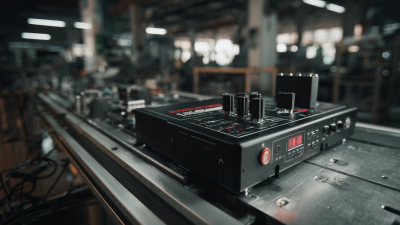
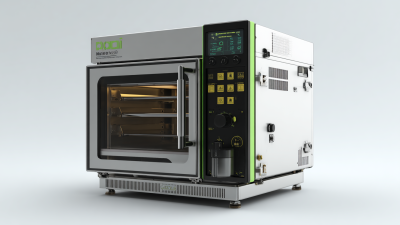
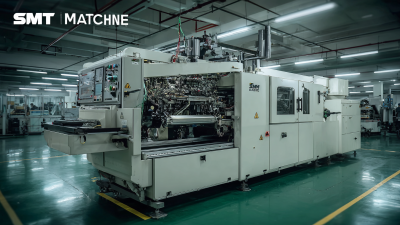
Hey, in today’s fast-changing world of manufacturing, bringing Automated Test Equipment (or ATE) into the picture has really shaken things up when it comes to quality control across various industries. With over 15 years spent in the surface mount technology (SMT) field, Morel Equipments Co., Limited has grown from just offering accessories to being a full-on all-in-one solution provider. We now offer everything from cutting-edge pick-and-place machines and automatic soldering robots to ICT & FCT testers and solder paste equipment. It’s quite clear how crucial ATE has become in boosting efficiency and helping companies meet industry standards. In this article, I want to share how ATE is really changing the game—improving production reliability, setting new benchmarks for operational excellence, and ultimately helping businesses hit higher standards when it comes to performance and productivity.
Understanding Automated Test Equipment and Its Role in Quality Control
Automated Test Equipment, or ATE for short, really is a game-changer when it comes to improving quality control across different industries. Basically, by automating the testing process, ATE helps companies get things done faster and with fewer errors—especially in situations where data needs to be transmitted at lightning speeds. For example, there are reports showing that using ATE in semiconductor manufacturing can make testing devices so much more efficient—cutting down the time and resources you'd normally spend on manual checks. These systems, thanks to advanced tech, can give you real-time feedback and monitor things on the fly, making sure everything meets industry standards and boosting overall product quality.
When you’re actually rolling out ATE, it’s a good idea to stick to a testing pyramid approach. This means setting up different layers—unit tests, integration tests, and end-to-end tests—in a way that makes sure nothing slips through the cracks. It also pays to keep your automation team closely connected with your Scrum development teams. Good collaboration there helps avoid headaches and keeps everyone on the same page.
Oh, and with new tech like RFID coming into the picture, things get even smarter. RFID allows for things like dynamic wafer tracking, which can bump testing efficiency up by over 30%. In today’s fast-moving digital world, jumping on these kinds of innovations is pretty much essential if you want to stay ahead of the game and keep up with market demands.
Key Benefits of Implementing Automated Test Equipment in Manufacturing
You know, integrating Automated Test Equipment (or ATE for short) into manufacturing has really pushed the boundaries of quality control. It’s like, industry standards are getting higher and everything’s running more smoothly. I read somewhere—Technavio, I think—that the global ATE market’s set to grow around 7% each year until 2025. That’s pretty quick, right? It just shows how more and more companies are jumping on the bandwagon with these tech upgrades. Basically, ATE systems help manufacturers test products consistently. So, before anything hits the shelves, they make sure everything’s up to snuff. That’s a big win because it not only keeps products reliable but also cuts down on costly recalls and repairs—which, by the way, can rack up to around $1.6 million each time, according to the folks at the Quality Assurance Institute.
And here’s the cool part—using ATE can seriously cut down testing times. McKinsey & Company reports that companies using automated testing can boost their efficiency by as much as 30%. When routine checks become automated, workers aren’t spending endless hours on simple tasks—they can focus on more complex stuff that really needs a human touch. This means products get to market faster, which is a huge plus in today’s competitive scene. As more industries dive into automation, it’s clear that ATE isn’t just a nice-to-have but a must-have for keeping quality high and operations running smoothly. Honestly, it’s pretty exciting to see how much this tech is changing the game.
Comparing Traditional Quality Control Methods with Automated Solutions
The world of quality control is really changing these days. More and more industries are turning to automated test equipment—known as ATE—to boost both efficiency and precision. You know, the old-school methods, like manual inspections and relying on someone’s judgment, have definitely started showing their age—things like inconsistency and slow turnaround times. Interestingly, a report from the International Society for Automation mentions that companies using ATE have cut their operational costs by up to 30%, and they’re catching defects about 40% more often. That’s a pretty big deal, right? Moving from manual checks to automated processes doesn’t just make workflows smoother; it also lines up with what today’s markets demand—faster, more accurate results.
Plus, automating really cuts down on human errors and speeds things up. For example, a study by the Quality Assurance Institute showed that companies who adopted ATE were able to respond to defects about half as fast. That kind of quick turnaround means they can adapt more easily to changes in production and deliver more reliable products—so they stay competitive in an ever-changing market. As more industries jump on board with these new technologies, it’s become pretty clear that there's a pretty noticeable gap between traditional methods and the automations of today—they’re just more effective all around.
Challenges in Integrating Automated Test Equipment into Existing Systems
Bringing automated test equipment (ATE) into existing setups can be pretty tricky, and industry folks know this all too well. One of the biggest headaches is making sure ATE plays nice with older systems. A lot of companies are still running on outdated tech, which doesn’t always play nicely with new automated testing tools. That can mean shelling out more money or dealing with delays, just because upgrades are needed or operations get a little disrupted during the switch-over.
And it’s not just tech—it’s also about people. Workers who are used to doing manual testing might find it tough to get the hang of the new, more advanced automated systems. This can slow things down during the early days of implementation. To make things smoother, companies really need to invest in training and change management. It’s important that employees not only learn the new tech but actually feel comfortable using it—that’s how you turn automation into a real win, boosting productivity instead of holding things back.
Future Trends in Quality Control and the Growing Importance of Automation
Looking ahead, it’s pretty clear that automation is becoming a game-changer in quality control across lots of industries. Companies are really starting to see just how much tech can boost efficiency while still keeping quality high. Take the fruit and veggie sorting equipment market, for example — it’s expected to jump from around $475 million in 2024 to over $660 million by 2032, growing at about 4.3% each year. Automated sorting isn’t just about speed; it also cuts down on human mistakes, ensuring that the produce people buy is consistently top-notch and meets what customers are now expecting.

On a similar note, the software testing services market is also booming — it’s predicted to hit roughly $43 billion in 2023, with an annual growth rate of just under 4% through 2032. As software gets more complex, automating testing isn’t optional anymore; it’s essential for checking that everything works smoothly and performs well. Automated testing tools help companies get faster results and more reliable feedback, so they can adapt quickly to market changes.
And don’t forget the 3D measurement market — it’s set to grow huge, reaching nearly $39 billion by 2029. That’s mainly thanks to tech advancements that make manufacturing and production more precise. All these trends show just how big a role automation is playing in quality control today — pushing industries to adopt innovative tech solutions to stay competitive and keep growing strong.
Case Studies: Successful Adoption of Automated Testing in Various Industries
Automated test equipment (or ATE, as folks often call it) is really changing the game when it comes to quality control in a bunch of different industries. I mean, it’s all about making things more efficient and precise. Take the automotive world, for example—car manufacturers are now using ATE to test parts on the fly during production. This shift has made a huge difference, cutting down on defects and catching problems faster. It’s not just speeding things up; it’s also helping make vehicles safer overall.
And it’s not just cars—electronic companies are diving into automation too, especially with more complex devices nowadays. With ATE, they can test circuit boards much quicker than before, sometimes in a matter of minutes instead of hours. That means their production lines move faster, and they stay competitive because they’re meeting all the right standards.
If you’re thinking about jumping into automated testing, a good tip is to look at how big your operation is and what exactly you need tested. It’s often helpful to start with a pilot run—try it out on a small scale first to see if it really works for you. Plus, training your staff regularly on the latest ATE tech can make the whole switch smoother and more successful. Trust me, the more they’re up to speed, the better your results will be.
FAQS
utomated Test Equipment (ATE)?
ATE significantly reduces the time and resources spent on manual testing by streamlining the testing of devices under test (DUT), leading to improved product quality and compliance with industry standards.
Implementing ATE raises industry standards, enhances product reliability, minimizes costs associated with recalls and repairs, and drastically reduces testing time, thus improving operational efficiency.
Teams should follow the testing pyramid approach by incorporating unit tests, integration tests, and end-to-end tests systematically, and ensure alignment between the testing automation team and development Scrum teams.
RFID technology improves testing efficiency by enabling dynamic wafer tracking, which can enhance testing efficiency by over 30%.
The global ATE market is expected to grow by 7% annually through 2025, indicating a rapidly expanding adoption of these technologies in various industries.
The future of quality control involves increased automation, as seen in the growth of markets like fruit and vegetable sorting equipment and software testing services, which require fast assessment cycles and reliable outcomes.
As software complexity increases, automation in software testing is imperative for ensuring functionality and performance, enabling quicker responses to market changes.
ATE optimizes processes such as sorting in the fruit and vegetable market, significantly reducing human error and ensuring consistent quality in products.
By automating routine checks and measurements, ATE allows manufacturers to allocate human resources to more complex tasks, optimizing workforce productivity and allowing quicker turnaround of products.
Conclusion
You know, these days in manufacturing, Automated Test Equipment (ATE) is becoming pretty much a game-changer when it comes to quality control. It’s not just about speeding things up—it really helps ensure tests are consistent and accurate, which is something traditional methods often struggle with. Once companies start using ATE, they tend to see some pretty sweet benefits—like cutting down on labor costs, getting products out faster, and boosting reliability. Sure, putting ATE into existing setups isn’t always a walk in the park, but honestly, the perks definitely outweigh those little hurdles. It’s paving the way for smarter, more advanced quality checks all around.
Looking ahead, it seems like automation, ATE included, is only going to become more central in quality control. Companies like Morel Equipment Co., Limited, with their deep roots in the SMT industry, really show how embracing ATE can totally revolutionize manufacturing. As things keep evolving, it’s clear that automated solutions will be crucial for maintaining top-notch quality and efficiency—changing the game on how we test and validate products. It’s an exciting time for the industry, no doubt about it.