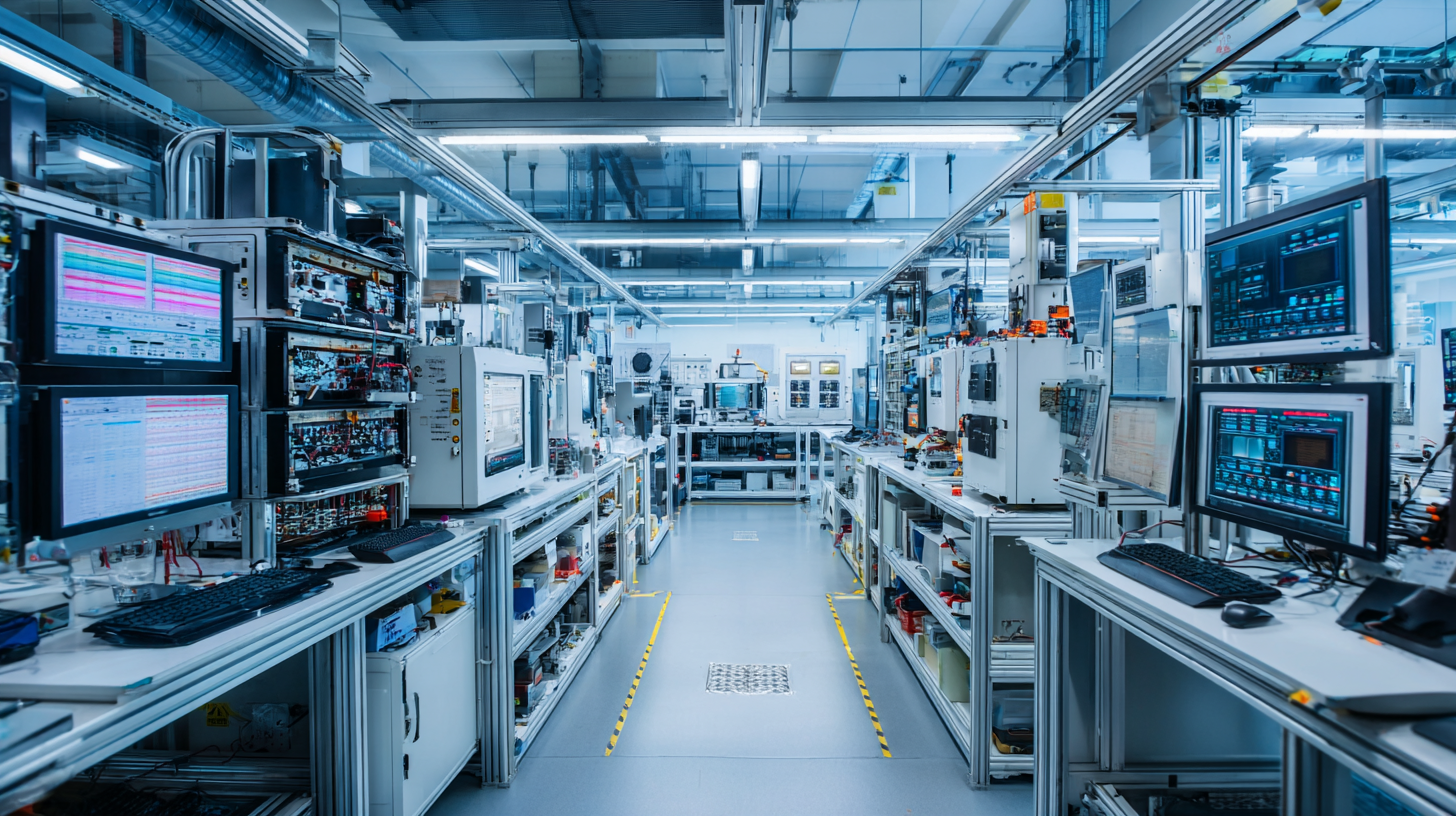
You know, in the fast-paced world of electronics these days, having Automated Test Equipment (or ATE for short) has really become a game-changer. If you’ve been keeping an eye on the market, you might have seen that according to a recent report from MarketsandMarkets, the global ATE market is expected to hit around USD 6.36 billion by 2025. That huge number is mainly because everyone’s demanding more advanced electronic gadgets, and companies are under pressure to make sure their products are top-notch quality.

At Morel Equipments Co., Limited, with over 15 years of experience in surface mount technology (or SMT), we’ve been right there in the middle of all this change. We started off mainly just supplying accessories, but now, we’re moving towards offering full solutions—like our innovative pick-and-place machines, automatic soldering robots, and ICT & Fct Testers. These tools are designed to make testing faster, cut down costs, and most importantly, improve thereliability of the final products.
In this blog, I want to chat a bit about the perks of using ATE in today's testing setups. Honestly, it can really boost efficiency and make the whole testing process way more effective—not to mention less stressful for everyone involved.
The Essential Role of Automated Test Equipment in Modern Testing Paradigms
In today’s fast-moving tech world, Automated Test Equipment, or ATE for short, is becoming more and more essential. It’s like having a super handy assistant that takes care of all the boring, repetitive testing stuff, so engineers can actually focus on the tricky, more important parts of developing a product. Thanks to some pretty advanced diagnostic tools, ATE doesn’t just make tests more accurate — it also helps speed things up overall. Plus, with real-time data collection and analysis, teams can react quickly if something's not quite right during the process.
But honestly, ATE isn’t just about saving time. As electronic systems grow more complex, thorough testing isn’t optional anymore — it’s a must. The cool thing about automated testing equipment is that it can easily scale to fit different testing needs, making sure products meet high standards without sacrificing quality. As industries push for innovation, ATE really stands out as a key player in ensuring products are reliable and high-performing. It’s pretty much a backbone for manufacturers trying to stay competitive in such a fast-changing market.
Five Key Advantages of Using Automated Test Equipment for Enhanced Accuracy
Automated Test Equipment (or ATE for short) is really shaking things up in the world of testing these days, especially in areas like electronics manufacturing and telecom. One of the coolest parts about using ATE is how much more accurate it makes testing. I read in this report from the International Journal of Advanced Manufacturing Technology that automated systems can boost testing accuracy by over 30%. That’s a big deal because it really cuts down on those silly mistakes humans can make when doing manual tests.
Plus, ATE isn’t just about accuracy — it saves both time and money too. The Automation Federation mentions that companies using automated testing methods can cut labor costs by as much as 40%. That’s a lot of saved cash, and it means teams get to spend more time on the fun stuff—like innovating and developing new ideas—rather than getting stuck in repetitive test routines. Oh, and since these systems can run all day and night without stopping, products get to market way faster, which is super important in today’s super competitive market.
And here’s something even cooler—ATE allows for huge amounts of data to be collected and analyzed on the fly. A study from the Electronic Industries Alliance shows that companies using automation can capture and analyze testing data almost 50% faster. That means they can make smarter decisions quicker and deliver higher quality products. All this stuff really helps companies work more efficiently and encourages a data-driven approach to decision-making—pretty awesome, right?

Industry Statistics: How Automation Improves Testing Efficiency by Up to 40%
In today’s really fast-moving tech world, automated test equipment (or ATE for short) is becoming a must-have in modern testing setups. Yeah, industry stats show that bringing automation into the mix can boost testing efficiency by up to 40%. And honestly, that’s a pretty huge deal — it means quicker turnarounds and lower operational costs. For businesses that want to stay competitive, ATE isn’t just a nice-to-have; it’s essential.
To get the most out of automation, it’s important to follow some best practices. One tip that always helps is to make sure your test scripts are optimized. Keep them simple, clear, and easy to maintain. When you write straightforward scripts, your team saves a lot of time fixing bugs or making tweaks — which adds up to increased overall efficiency.
Another thing I’d suggest is investing in the right tools. Look for ATE systems that can easily integrate with what you’re already using. Equipment that’s flexible and scalable can really make a difference as your testing needs grow or change. If you focus on these strategies, not only will your testing run smoother, but you'll also set your team up for long-term success with automation.
All in all, embracing automation with smart choices can make a real difference — faster, cheaper, and better results. That’s the goal, right?
Cost-Benefit Analysis: Calculating ROI for Implementing Automated Test Equipment
Implementing Automated Test Equipment (ATE) in today’s testing environments can really make a difference, but it’s super important to do a solid cost-benefit analysis first to see if it’s worth the investment. Sure, there are some upfront hurdles—like the high initial costs, training your team, and figuring out how to get everything to work smoothly together. But, when you weigh those costs against the time you'll save, the improved accuracy, and lower labor expenses, the benefits start to look pretty compelling. In fact, you might be surprised at how quickly it can pay off.
When you're crunching the numbers for ROI, you’ve got to look at all sides. The time savings from automation can seriously cut down testing cycles, meaning your products hit the market faster. That’s a win for staying competitive and keeping your customers happy. Plus, reducing human errors means fewer mistakes—that translates into less rework and fewer recalls, which is good for your bottom line. Comparing these gains to traditional methods paints a clearer picture of whether ATE makes financial sense for your company. Ultimately, it helps you make smarter, more informed decisions aligned with your operational goals.
Top 3 Technologies Driving Innovation in Automated Testing Solutions
In today’s fast-changing world of automated testing, there are a bunch of really exciting new technologies making waves. Among them, AI (or artificial intelligence) definitely takes center stage—it's really boosting what organizations can do. I read recently that the global tech market could hit around $9.6 trillion soon, and a big reason for that is the growing use of AI. This technology isn’t just about fancy gadgets; it’s helping businesses get more creative and innovative. As companies start weaving AI into their testing routines, they find ways to run things smoother, make smarter decisions, and get their products out faster. That’s a big edge in today’s competitive, tech-focused world.
And it doesn’t stop there. When AI starts teaming up with other cool tech like blockchain, we’re seeing new testing solutions pop up left and right. These innovations are not only changing how testing is done but also helping the growth of bioeconomy and pushing for more sustainable practices. According to McKinsey, companies that dive into the mix of different technologies are setting themselves up to lead what's called the fifth industrial revolution. There are already over 1,000 documented stories of businesses successfully using AI, which clearly shows that those embracing these upgrades are transforming their operations—boosting productivity and efficiency all around.
All in all, it’s an exciting time, and it feels like we’re just scratching the surface of what these tech combo moves can do for the future of automation and innovation.
Integrating Real-Time Data Analytics to Optimize Test Equipment Performance
In today’s fast-changing tech world, getting a handle on automated test equipment (ATE) is pretty much a must if you want your testing to be on point. One of the biggest game-changers? Integrating real-time data analytics into your testing process. When you’re able to use live data, engineers can instantly see how everything’s performing, catch weird stuff early on, and fix problems before they blow up. Honestly, this doesn’t just make testing faster and more efficient—it also means less downtime, which leads to more trustworthy and accurate results.
And here’s the cool part: by keeping an eye on real-time analytics, teams can continuously tweak and improve their testing strategies. Analyzing performance metrics as you go allows for quick adjustments, helping you stay adaptable and make smarter use of resources. It’s all about being flexible and responsive—something that’s super important in today’s super fast-paced environment.
As we keep pushing the limits of tech, the combo of automated testing and real-time data will be key to driving innovation and making sure our testing performance stays top-notch.
FAQS
utomated Test Equipment (ATE) in modern testing environments?
ATE enhances efficiency by significantly shortening testing cycles, enabling faster market release, and improving overall competitiveness and customer satisfaction.
Integrating real-time data analytics with ATE allows engineers to gain immediate insights into equipment performance, detect anomalies, reduce downtime, and enhance the accuracy and reliability of test results.
Factors to consider include initial acquisition costs, training expenses, system integration challenges, potential time savings, increased accuracy, and reduced labor costs.
Comprehensive testing is essential due to the rising complexity of electronic systems, ensuring products meet rigorous standards without compromising quality.
ATE minimizes the potential for human error by automating testing tasks, which reduces the likelihood of costly rework or product recalls.
ATE facilitates real-time data collection and analysis, allowing for a more agile response to potential issues that may arise during development.
The implementation of ATE can lead to reduced labor costs, minimized rework and recalls, and improved efficiency, which collectively can have a positive impact on a company's bottom line.
ATE provides the scalability and innovation necessary for delivering reliable, high-performing products, helping manufacturers stay competitive in a dynamic market.
Continuous improvement through ATE allows teams to adapt to new challenges and optimize resource allocation, fostering agility and responsiveness in modern testing environments.
Conclusion
In today's world of testing, Automated Test Equipment (ATE) is pretty much a game-changer. It really helps boost both the accuracy and speed of testing processes. When companies use ATE, they often see efficiency jump by around 40%, which means operations run smoother and there's a lot less room for mistakes. Plus, with real-time data analytics kicking in, tests become smarter — allowing teams to make better decisions on the fly and tweak things quickly during testing.
On top of that, if you do the math, investing in ATE usually pays off pretty well — it’s a solid return that makes it a no-brainer for firms looking to step up their game. As the SMT industry keeps evolving, new tech—like super advanced pick-and-place machines and automatic soldering robots—are really changing the game, setting new standards for accuracy and dependability. At Morel Equipments Co., Limited, with years of experience in the SMT world, they’re right there leading the charge, offering solutions that meet the ever-changing demands of the industry.